
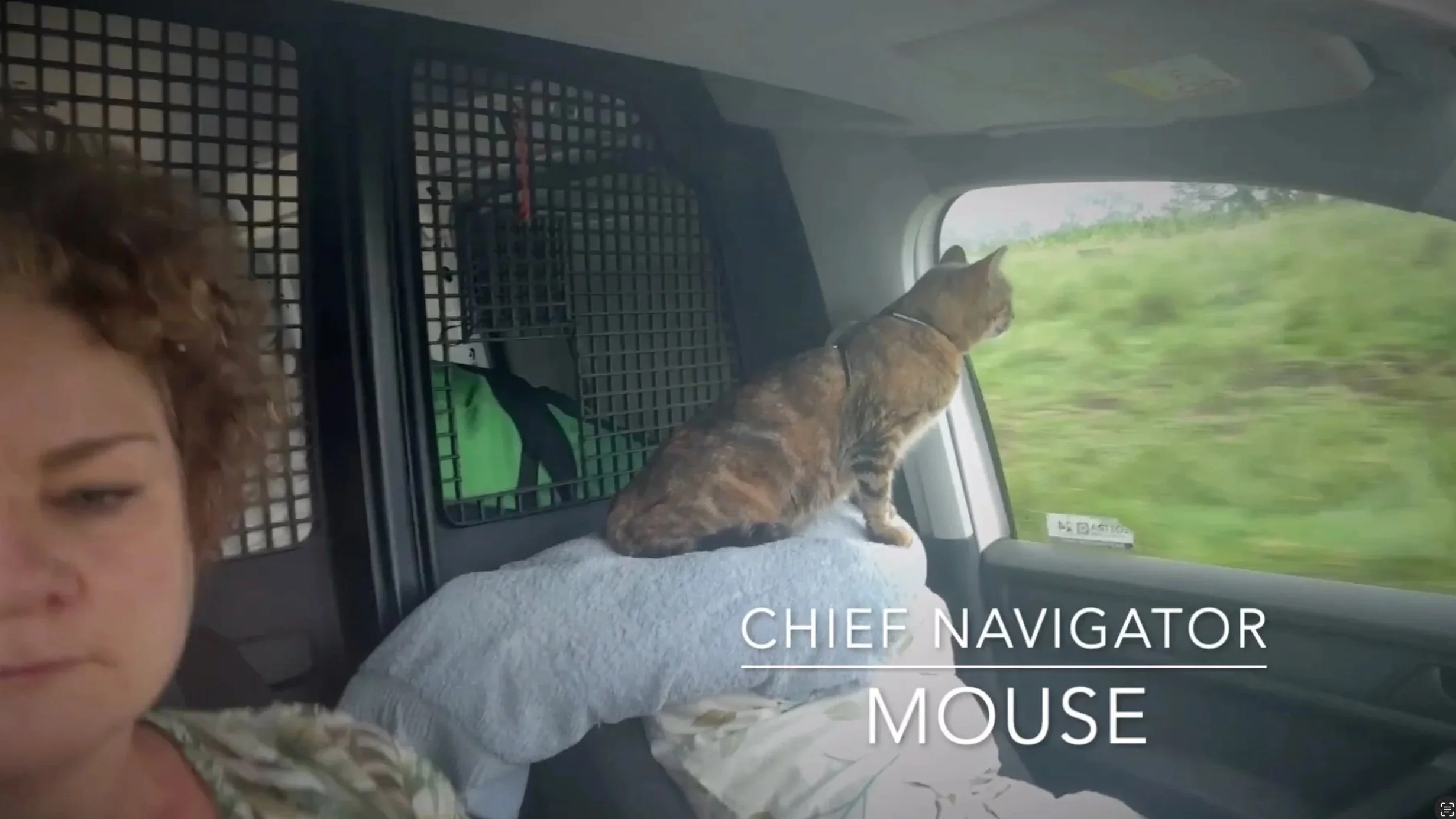
I am a foundling when we meet, making my way into a stormy life chapter that has few compass points to help with navigation.
She is a swirl of strawberry blonde, ash blonde and brunette who struts up to me in a kitten shelter, picks me out of the lineup and says:
“I’ll take this one, thank you.”
She is the cat called Mouse — she can’t have any other name, given the stripes down her back are those of a field mouse — and from then on we are inseparable.
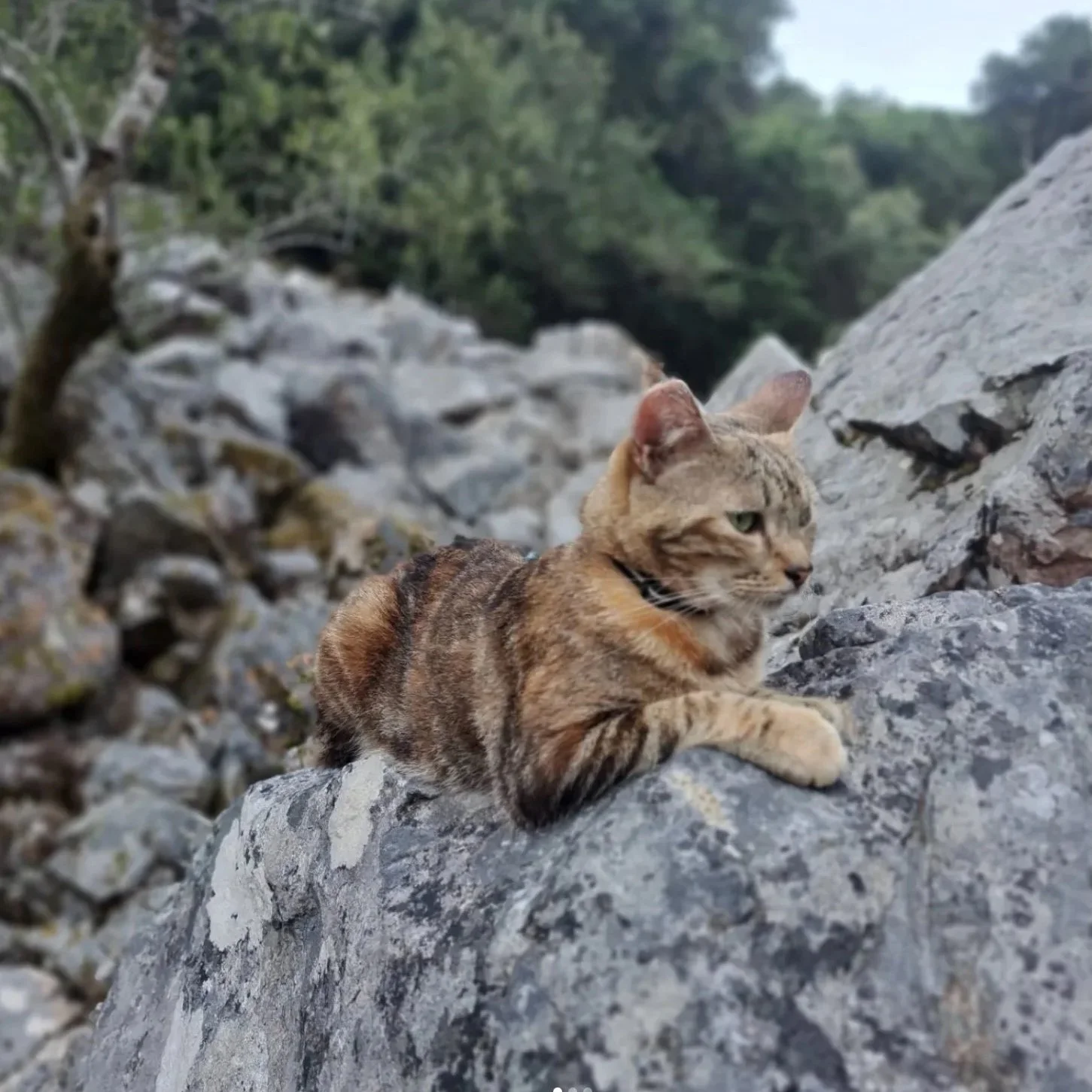
During our time in Cape Town, we bond on the mountain: she must have summited Table Mountain more times than most Capetonians. When Story Ark hits the road, she becomes the ship’s chief navigator and plucky comic relief.
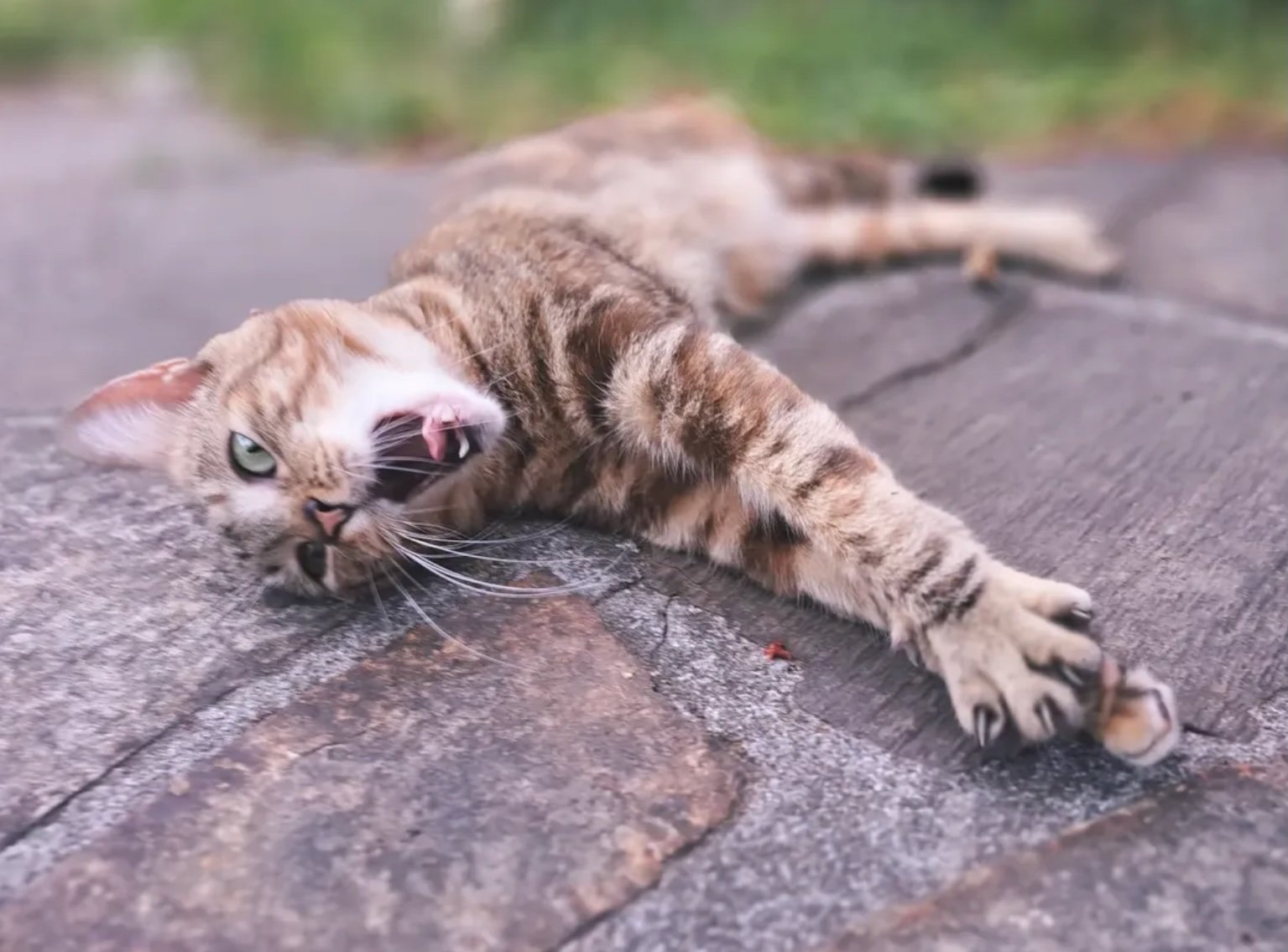
Mouse is the quiet type. She only speaks when she has something important to say. When she does, it’s usually in quiet chirrups and thoughtful mmmmrrrrrrrrr-s. Except when we’re travelling in the car. Then, there are times when she wails like she’s mourning the dead. Sometimes it’s the guttural low of a cornered bullock. Thankfully this doesn’t happen often, because she’s inconsolable in these moments.
Mostly though, she speaks with her body: a faint timpani from her throat, broadcasting a moment’s contentment; curled, croissant-shaped, behind my knees at night; boring me with her gaze at dawn as if to will me awake, sometimes digging an elbow into my head if that doesn’t work; the delighted swishing of a tail that’s like a perpetual motion machine. (Her tail is never still. Such is the size of its personality, it could have its own Instagram account.)
It’s something of a surprise, then, when we have one of those knock-down-drag-out arguments that are reserved for close family.
It happens in autumn this year, the first night at a campsite south of Durban on South Africa’s muggy east coast. We’ve just dropped anchor, and a few things have changed for Story Ark and its crew.
Six months earlier, I’d taken on board a ten-week-old kitten that we’d met in Sodwana. I thought another deck-hand might be fun for both of us.
I joked at the time that Birdie was a stowaway. But Mouse’s raised voice and caustic tone made it clear that she’d have preferred me to throw Birdie in the brig. Or have her walk the plank.
Looking back, it’s hard not to regret this decision, as much as the gregarious and perpetual chatty Birdie has won over my heart. (She has verbal diarrhoea at times, seeming to forget to draw breath between all the things she has to say.)
I thought we’d worked things out by now, but even after all this time Mouse is still unhappy. She’s aloof, cold even, and it’s cracking fissures in my heart.
The second change is that I’ve traded in the plumber’s van for a two-berth motorhome, because trying to do this work from a tent was proving too hard. The new wheels could be called The Growler: a Nissan Hardbody 4x4 that sounds like its vocal chords have been cured over the smoke of too many Gauloises plains. The van travels at the speed of an ox-wagon from the 1850s. This means the cats are cooped up in a tight cabin for long hours, the engine rattling them and their ear drums relentlessly.
That night, I shut us into the back of the van, thinking the structure of the new motorhome will feel safer and more comfortable than the tent.
Mouse is having none of it, though.
“Let me out” she hisses, tearing at the bug screen on the bedside window.
I stroke her, hoping she’ll settle.
“Let me out!” she spits from atop the kitchen counter.
I croon something that’s less about words, more about tone.
“Let me out! Let me out! Let. Me. OUT!”
“OK!” I snap back, lunging for the door, throwing it open.
“Go! Off you go!”
The hours that follow are dark and cavernous.
I toss in bed, waiting for her to wander back home.
Midnight.
What if she no longer feels that our camper as her bolt-hole and home?
Two in the morning.
What if she hates the new crew-hand so much — resents me so much — that she wants nothing more to do with us?
Three-thirty-seven.
What if she’s jumped ship?
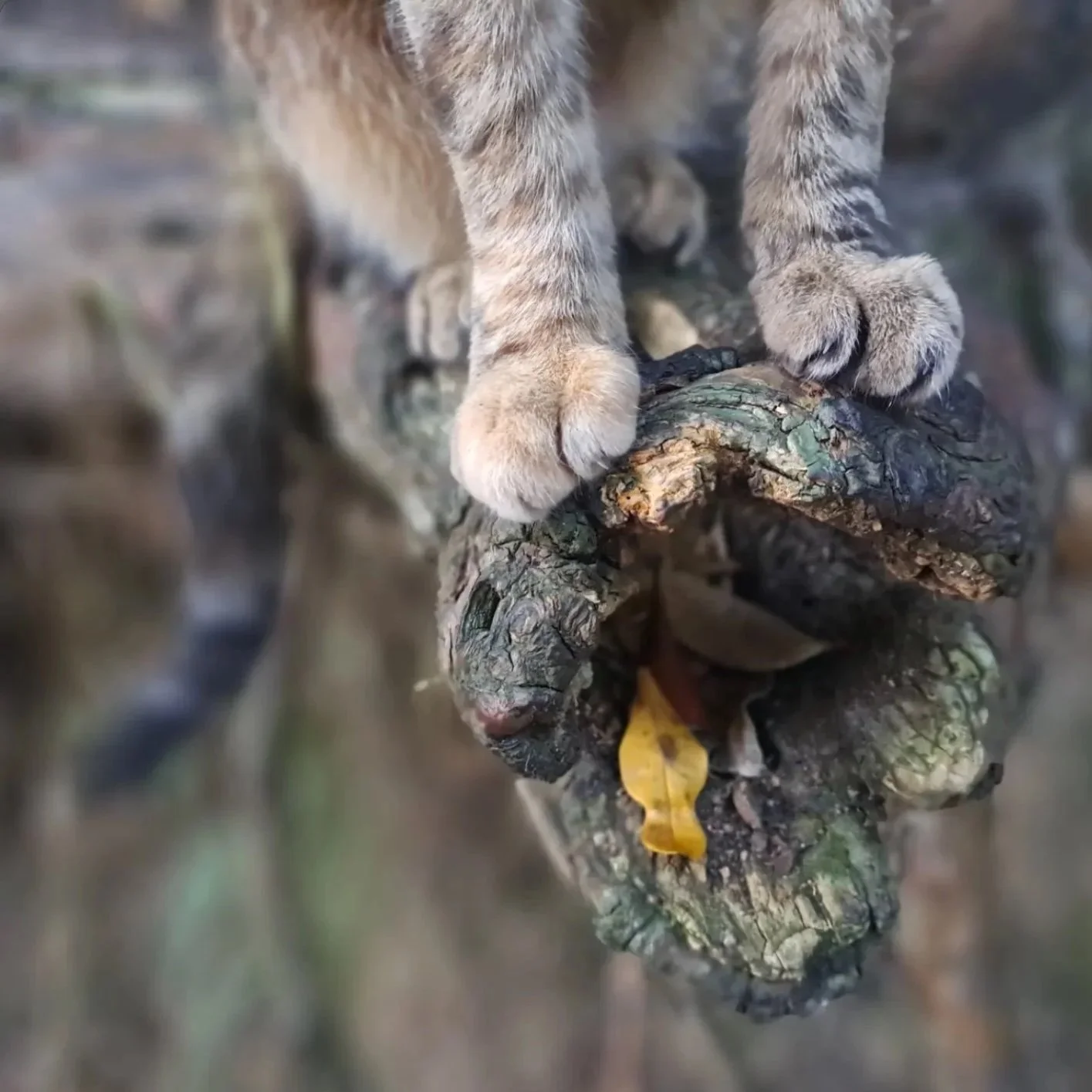
Four-o-nine.
What if…?
Dawn chorus.
What if… what if… what if… ?
No Mouse to do early-morning alarm duty. Just coffee to shake me awake.
There’s a series of patrols, marching around the campsite, calling softly and clicking the clicker (the equivalent of a dog whistle) to see if I can win her over, lure her from wherever she’s gone to ground.
Nothing.
The sun hoists itself higher. The humidity climbs. Breathing is like pushing against iron bars. No sign of her.
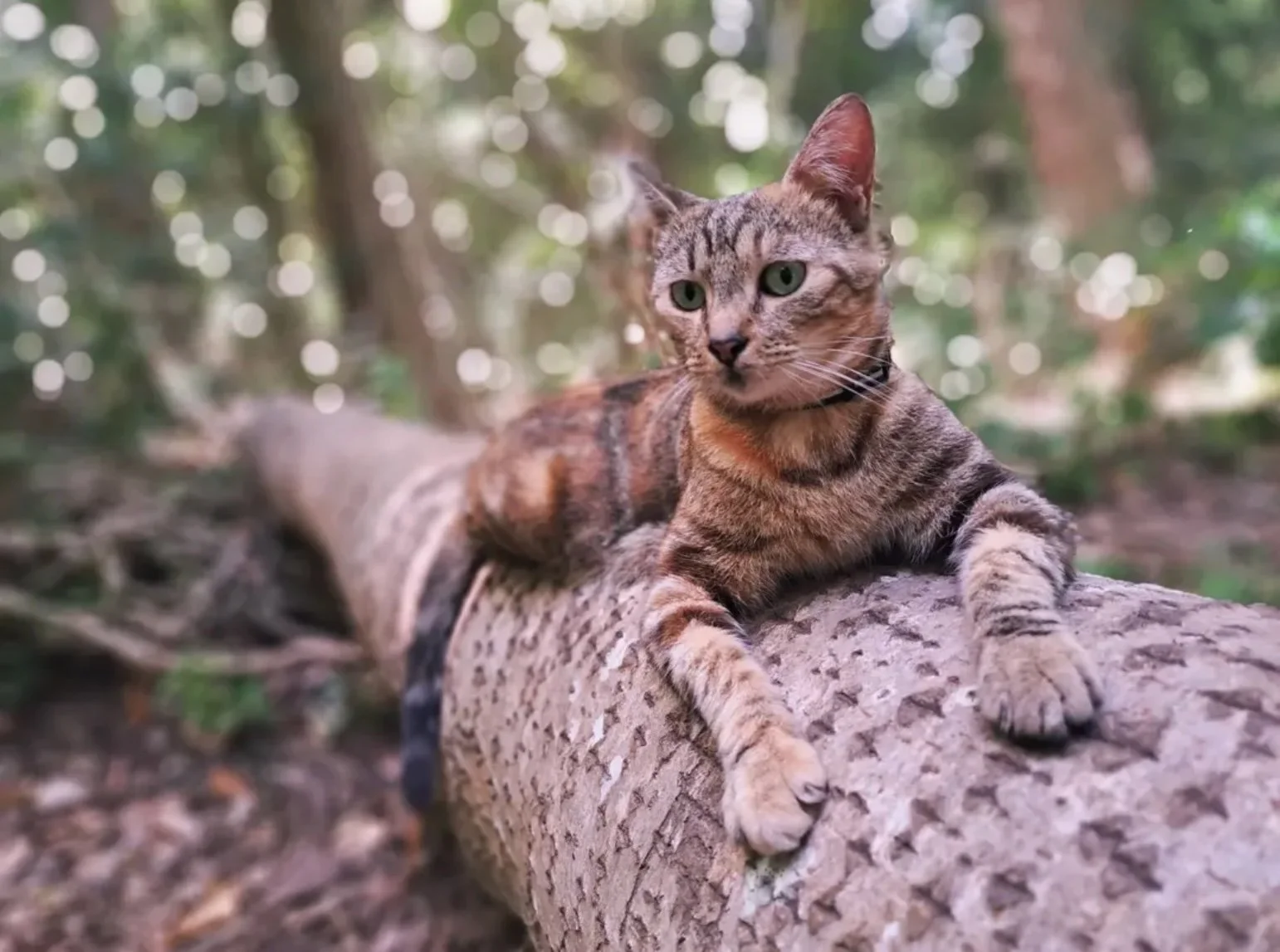
In the many months we’ve been on the road, Mouse has been ever-present. Even on those many camping nights where she seems to have disappeared into the bush — maybe for good, taken by an owl? — she proves time and again that she’s as reliable as a witch’s familiar. If I can’t find her, all I need to do is wander away from camp for a few metres, and she’ll materialise out of the dark.
Her absence today is so out of character that it’s hard not to expect the worst. Life without her would be unimaginable. Life without her — because I’ve driven her away by bringing Birdie on board — crushes the ribcage.
The sun dips past the yardarm. The shadows are as long as they are ominous.
And then, wordlessly, casually, Mouse saunters in over the buzz-cut grass. Towards the van. Towards us. Towards me.
She’s back.
It’s hard not to crush her, such is the gratitude, the relief, the joy in the embrace.
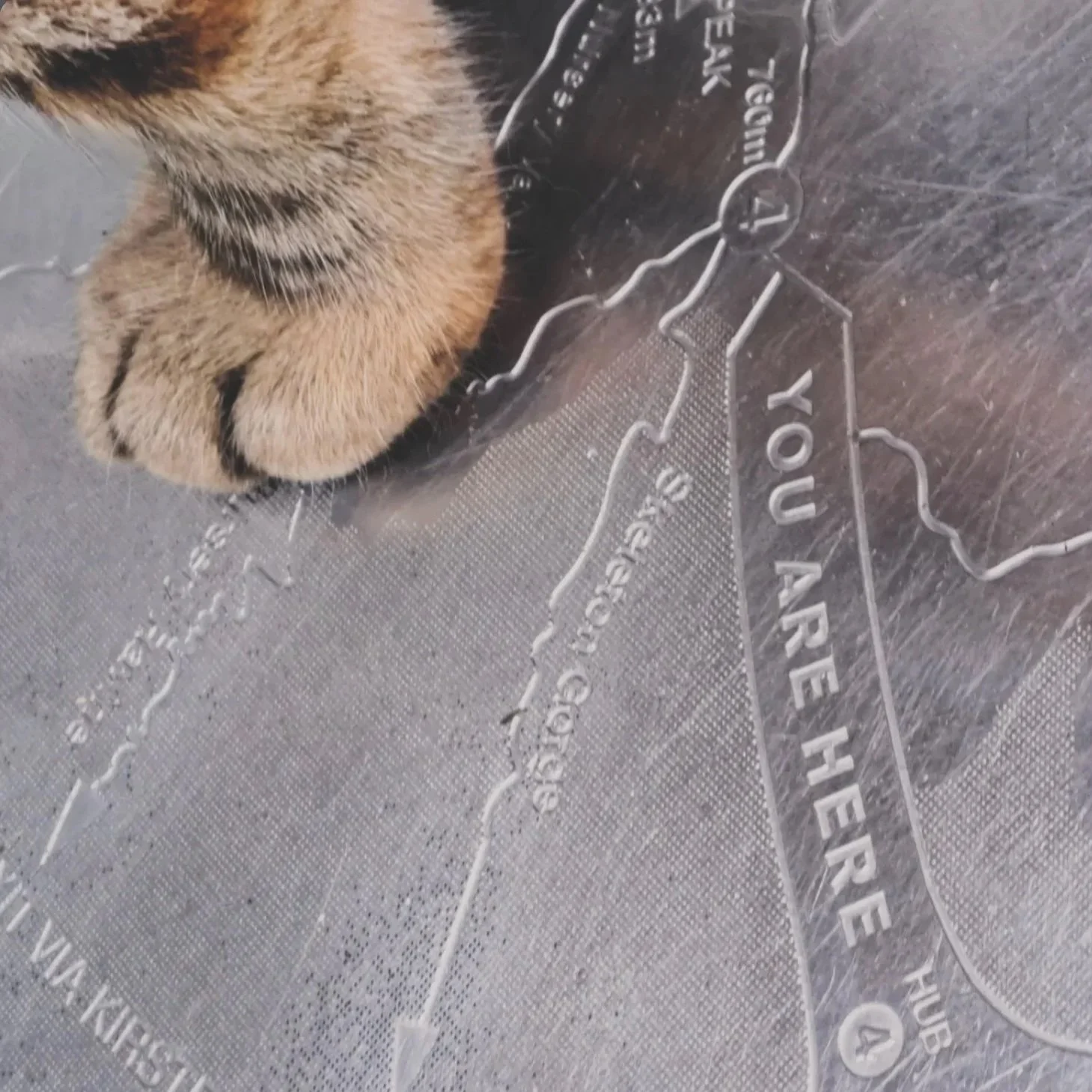
Mouse — companion, friend, fellow traveller, soul-mate and nervous-system-soother — is home.
That evening, while I swing in the hammock, she’s resumed her nocturnal place and role: the silhouette on the edge of the camp light. Sentry, statue, contemplation incarnate.
This has been Mouse since Story Ark set sail on 6 October 2024.
One morning, two months after this — we’re at another campsite, there’s another few hundred kilometres behind us — she returns from an early morning stroll. But she staggers. I run to her. There’s no obvious sign of injury but something’s very wrong. Has she been bitten by a snake? Has she eaten poison?
In a flash, we’re in The Growler, thundering towards the nearest 24-hour emergency vet. Her condition is so grave that her body has no muscle tone to brace against the shaking of the van. She’s barely conscious. I can barely breathe.
The vet examines her. Two small puncture marks. It looks like a dog — a really small one — has grabbed her by the neck. It’s the shaking that did it, not the bite. Her diaphragm is so badly torn that her intestines are pushing into her chest cavity. She’s too unstable for the surgery she so urgently needs.
They keep her in ICU for the weekend, hoping she’ll recover enough to be operated on.
What I hold on to from our last moments together, just before the vet takes her into theatre: Mouse’s eyes, the colour of a glacial lake, looking squarely at me in spite of the heavy meds she’s on; her paw curling weakly around my finger, claws pressing against my skin.
Mouse doesn’t make it through surgery.
This happened in May. I went to ground after that, staggering blindly in the void of her absence, and hiding from it by writing, writing, writing. This was one of the few times on the Story Ark voyage that I’ve wanted to throw in the towel. I’d just finished one of the Red Alert stories, and got tangled in a zero-sum-game calculation. Mouse’s life had been given up for a story that I doubted would make the slightest difference in the bigger scheme of things. How could I have done this to her? Why do this work if it comes at the cost of this formidable person? She was more important than any story I could write.
Mouse wasn’t a narrative device in the Story Ark story.
She wasn’t a pet.
She was my family. She’d been my closest companion for nearly five years. She was the one person who I knew loved me unconditionally and with an unquestioning devotion. But I had failed her. She was gone because of my decisions — both to bring Birdie on board, and to take her on this risky voyage.
I hadn’t protected her.
It’s been nearly seven months since then. The world is hollowed out. To quote the author Arundhati Roy: there’s a Mouse-shaped hole in the universe, and nothing can fill it.
Nothing.
I am bereft.