
Chapter 5
MOTHER LODE
In the 1880s, South Africa entered the precious metals club as the global heavyweight, holding the world’s largest deposits of the most ‘noble’ metal — gold — in a geological basin that’s not much bigger than Switzerland. It kicked off an era of mining and industry that made us the continental powerhouse that we are. A polluting, extractive powerhouse. And one of the most unequal.
But as the Indigenous saying goes, when the last tree is felled, the last river poisoned, the last gasp of air tainted, we will find that we cannot eat our bullion or bling.
We have another kind of gold, though. One that’s more precious than a Midas-load of Kruger rands. It holds the answer to the country’s hunger-obesity poverty-paradox. It channels the water that comes into our taps and flushes away our bathroom waste. It helps stabilise the planet’s ever more chaotic climate. South Africa’s real bullion is its soils and the communities of plants that sink their roots into this thin layer of ‘dirt’.
As we approach the limits of our reachable gold, we’re also seeing nature’s life-giving systems buckle under the pressure of the profit-driven extractive economy that mining has fuelled.
Nurturing healthy soils could be how we move forward into a new economic era that’s in line with planetary boundaries. The technology to grow carbon-trapping soils is billions of years in the making, so simple that even a kindergartener can learn the basics, and not a single miner needs to toil in hellish conditions kilometres down in the Earth’s mantle to be part of the most just transition of all.
7 May 2026
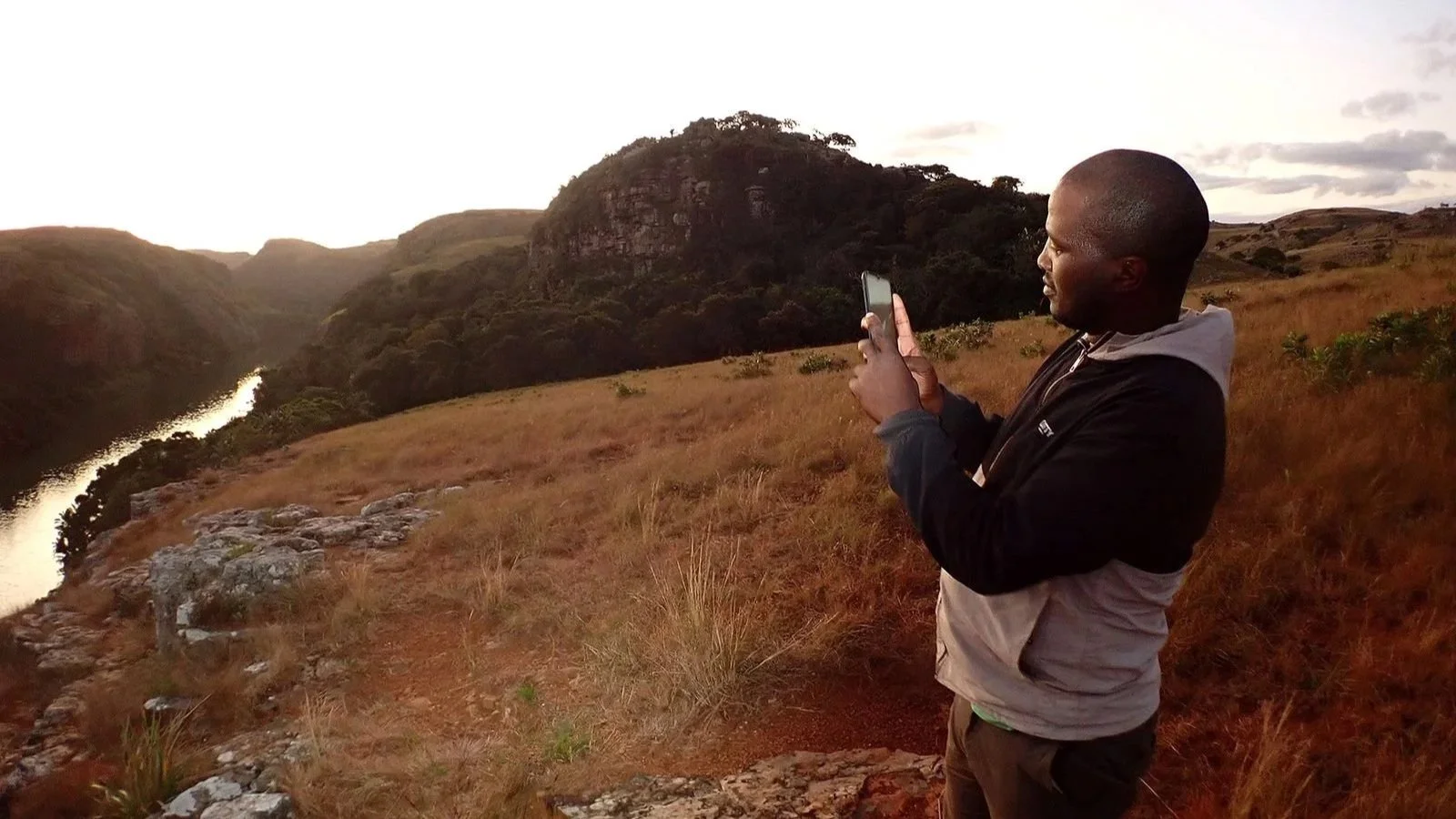
Gut feeling: Wild Coast’s food heritage holds solution to ‘lifestyle’ diseases
At a time when whole food farmers’ markets have been replaced by Whole Foods Market Inc, and glitzy packaged foods trump home-grown greens, research with farmers on the Wild Coast shows that sometimes progress means returning to our roots.
First published in the Daily Maverick.
More precious than gold.
More precious than gold.
More precious than gold.

More precious than gold.
More precious than gold.
More wordsmithery…
Scorched: South Africa’s changing climate is a vivid journey through southern Africa’s mesmerising landscapes as climate change sets in. It wanders through the KwaZulu-Natal Midlands to capture the last faltering calls of a rain frog that was named after the hobbit Bilbo Baggins. The author pauses for thought following an elephant stampede to consider how savannahs might shift in an altered climate. She trails the wading birds of the West Coast into the high Arctic tundra for their annual breeding season before returning to a Cape which is crisping over as drought continues to grip the province.
Another world exists somewhere beyond the global politicking of superpowers and petrostates. This is the place where a solitary bee continues to pollinate the pale, demure flower of an orchid near Darling, or where the limey coral skeleton hosts its colourful algae on a Sodwana reef. These plants and animals — many of which are unique to the region — continue to do what their ancestors have done for millions of years.
Yet the world is shifting its shape around them. In places it is warming and drying, elsewhere the rains come in greater deluges. Some are abandoned by the other plants and animals with which they have cohabited, as species retreat before the onslaught of rising greenhouse gases and altered weather patterns.
Scorched gives powerful local colour to a global problem. It ponders the morality of the changes humankind has wrought, and the future of life as we know it.

“Scorched gives powerful local colour to a global problem. It ponders the morality of the changes humankind has wrought, and the future of life as we know it.”